
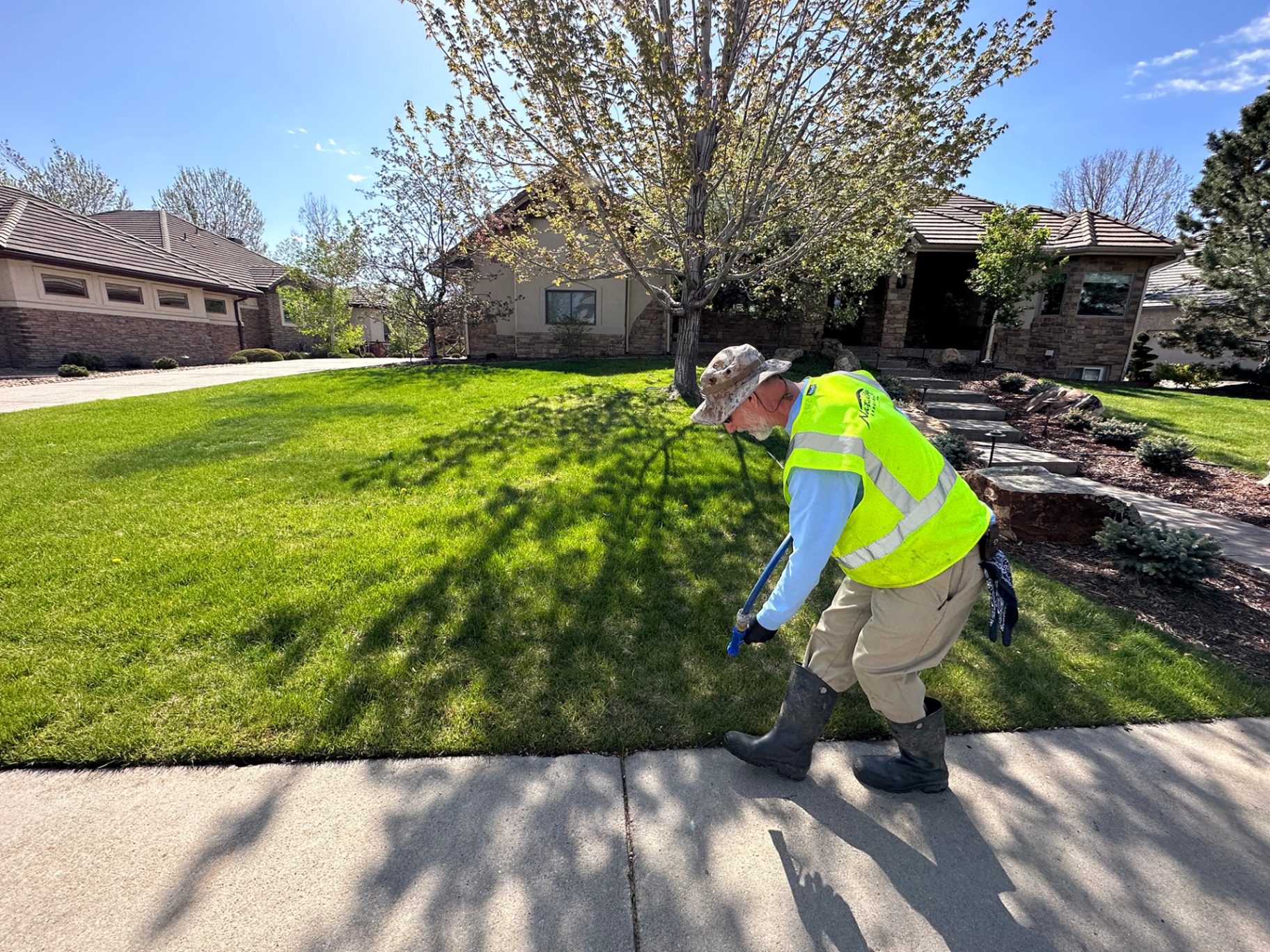
Healthy soil helps landscape plants access water, nutrients and oxygen. Organic landscape care focuses on supporting these underlying conditions through appropriate amendments, plant-specific fertilization and consistent maintenance, rather than treating every visible symptom as a reason to add more fertilizer.
Across Boulder County, soils vary from property to property. A newly landscaped site may have compacted ground, while a long-established yard may have different issues related to tree roots, drainage or past maintenance. In late summer and early fall, it is worth looking beyond the appearance of the lawn and garden to understand what is happening below the surface.
Recognize signs of soil-related stress
Plants may struggle even when they receive regular watering. Slow growth, thin turf, persistent bare patches or yellowing leaves can have several causes. Soil compaction may limit air and water movement, while drainage problems can leave roots too wet. Nutrient availability may also be influenced by soil chemistry.
A soil test and site assessment can help narrow the possibilities. Visual symptoms alone do not reliably identify a nutrient deficiency. Applying a fertilizer without knowing the underlying problem may waste resources or make certain conditions worse.
Improve soil structure thoughtfully
Organic matter can help improve some soil conditions, supporting aggregation and moisture management. Compost is one possible amendment, but the amount, quality and method of application matter. Not every soil benefits from repeated or heavy applications. Some compost products contain elevated salts or nutrients, and certain native or adapted plants prefer leaner conditions.
For established trees and perennial beds, avoid unnecessary disturbance of roots. Surface applications and other low-disturbance strategies may be appropriate depending on the site. A professional can recommend a plan based on the existing soil and plant needs rather than a universal treatment schedule.
Use fertilization as a targeted tool
Organic fertilizer programs should consider the type of plant, its growth stage, soil test results and existing nutrient levels. Turf, mature trees and drought-adapted garden plants do not necessarily benefit from the same treatment.
Products described as organic still require careful selection and application. Follow label instructions and avoid applying material where it can wash into storm drains or waterways. Organic care is a management approach, not a guarantee that every product is harmless or suitable for every garden.
Connect soil care with the rest of the landscape
Mulch, irrigation and maintenance practices influence soil health. A suitable mulch can moderate surface conditions and reduce evaporation, but its placement should account for plant crowns, tree trunks, drainage and firewise considerations near structures.
Irrigation should deliver water according to the soil's ability to absorb it. Avoid watering a compacted area more heavily simply because plants look stressed. Lawn aeration, where appropriate, may help address compaction. A maintenance plan that addresses weeds early, protects healthy roots and adjusts irrigation as conditions change can support the benefits of soil care over time.
Frequently asked questions
Is organic fertilizer always better for a landscape?
Not automatically. The most suitable product depends on soil conditions, plant needs, application timing and nutrient content. Testing and professional assessment can help guide the choice.
Can compost fix every Colorado soil problem?
No. Compost can be useful, but drainage, compaction, salinity or other conditions may require different solutions. Overapplication may create additional problems.
How long does it take to improve soil health?
Results vary. Improving a compacted or depleted landscape may require changes across multiple seasons. Regular observation helps determine whether the approach is working.
Support the landscape from the ground up
Native Edge Landscapes offers residential property care, including organic fertilization and plant and soil care, for homes in Boulder County. If your lawn or planting beds in Niwot, Longmont or Lafayette are struggling despite regular maintenance, request a consultation to discuss a site-specific plan.