You may need an irrigation upgrade if your yard has persistent dry spots, pooling water, leaking components, uneven coverage or a controller that no longer matches the landscape. A professional assessment can distinguish a simple repair from a larger system improvement and help you direct water where it is actually needed.
On the Colorado Front Range, an irrigation system is more than a convenience. It supports trees, lawns and planting beds through changing weather and dry periods. Yet many established systems were designed for a landscape that has since changed. Mature plants, new patios and modified beds can make the original layout inefficient.
Look for uneven watering patterns
Brown patches do not always mean a lawn needs more water. A blocked head, poor overlap between sprinklers or compacted soil can leave one area dry while another receives too much. Increasing the entire watering schedule may make the imbalance worse.
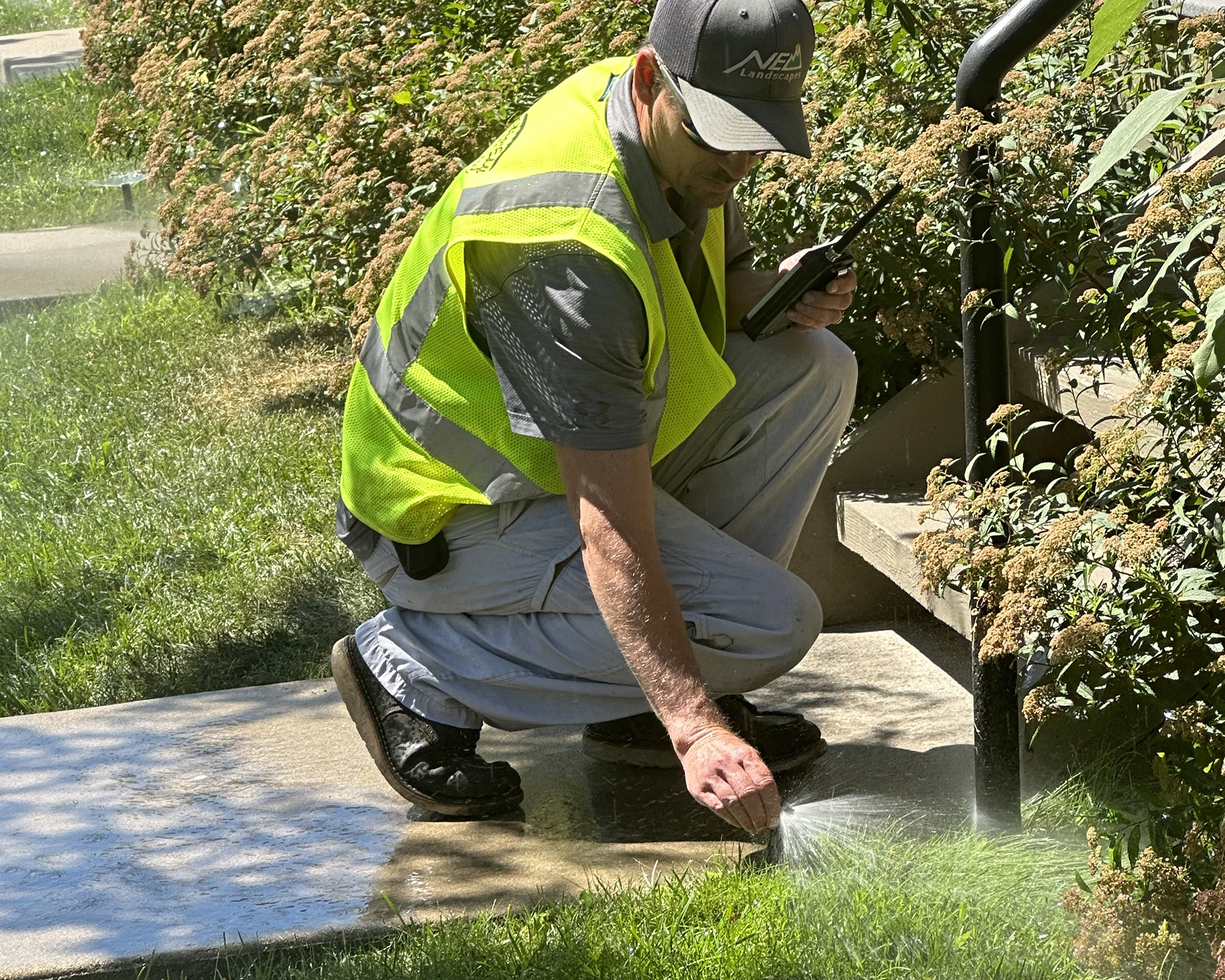
Observe the system while it operates. Look for water landing on sidewalks, spray blocked by plants, mist drifting in wind or puddles forming before water has time to soak in. A technician can evaluate coverage, operating pressure and the condition of individual components before recommending adjustments.
Check whether your landscape has outgrown its irrigation
As shrubs and trees mature, they may block sprinkler spray or develop different watering needs. A former lawn zone may now include perennial beds or a hardscape addition. If all these areas still receive the same watering schedule, some plants may become stressed while others receive more water than necessary.
Separating areas with different needs into appropriate zones can improve control. An irrigation specialist can determine whether existing infrastructure can be adapted or whether new lines and components make more sense. The best solution depends on what is already installed and what the landscape needs today.
Consider smarter controls and targeted delivery
Smart irrigation controllers can adjust schedules based on weather or soil conditions, depending on the device and setup. They are most useful when the rest of the system is functioning properly. A controller alone cannot correct a broken pipe, poor sprinkler layout or an improperly selected nozzle.
Drip irrigation can deliver water directly to suitable planting areas, reducing overspray. It still requires maintenance: emitters can clog, tubing can become damaged and plants can outgrow their original placement. Periodic inspections help catch those issues early.
On slopes or soils that absorb water slowly, shorter watering cycles separated by soak periods may help reduce runoff. For background on efficient irrigation, consult CSU Extension's irrigation management guidance.
Address leaks before adding technology
An unexplained increase in water use, persistently soggy soil or a sprinkler that does not operate normally may indicate a problem requiring repair. Water loss can occur at a visible head or in underground components. Have suspected leaks evaluated promptly rather than relying on a new timer to compensate.
An assessment should also consider applicable water-provider rules, seasonal restrictions and the need to protect the system against freezing. Do not assume that settings used in August remain appropriate in October. The system needs to respond as the landscape and weather change.
Frequently asked questions
Can I upgrade only part of an irrigation system?
Yes, depending on its condition and compatibility. Replacing inefficient heads, adding a suitable controller or modifying a planting-bed zone may be possible without replacing every component.
Will a smart controller guarantee a lower water bill?
No. Savings depend on previous water use, system condition, programming, plant needs and weather. Correct installation and regular monitoring are important.
When should an irrigation system be inspected?
An inspection at seasonal startup, after major landscape changes and whenever unusual performance appears can help identify problems. Scheduling winter preparation before freezing conditions is also important.
Make your irrigation work for your landscape
Native Edge Landscapes offers property care and irrigation management in Boulder County, including Lafayette, Erie and Longmont. Request a consultation to evaluate your existing system and identify practical opportunities for improvement.