
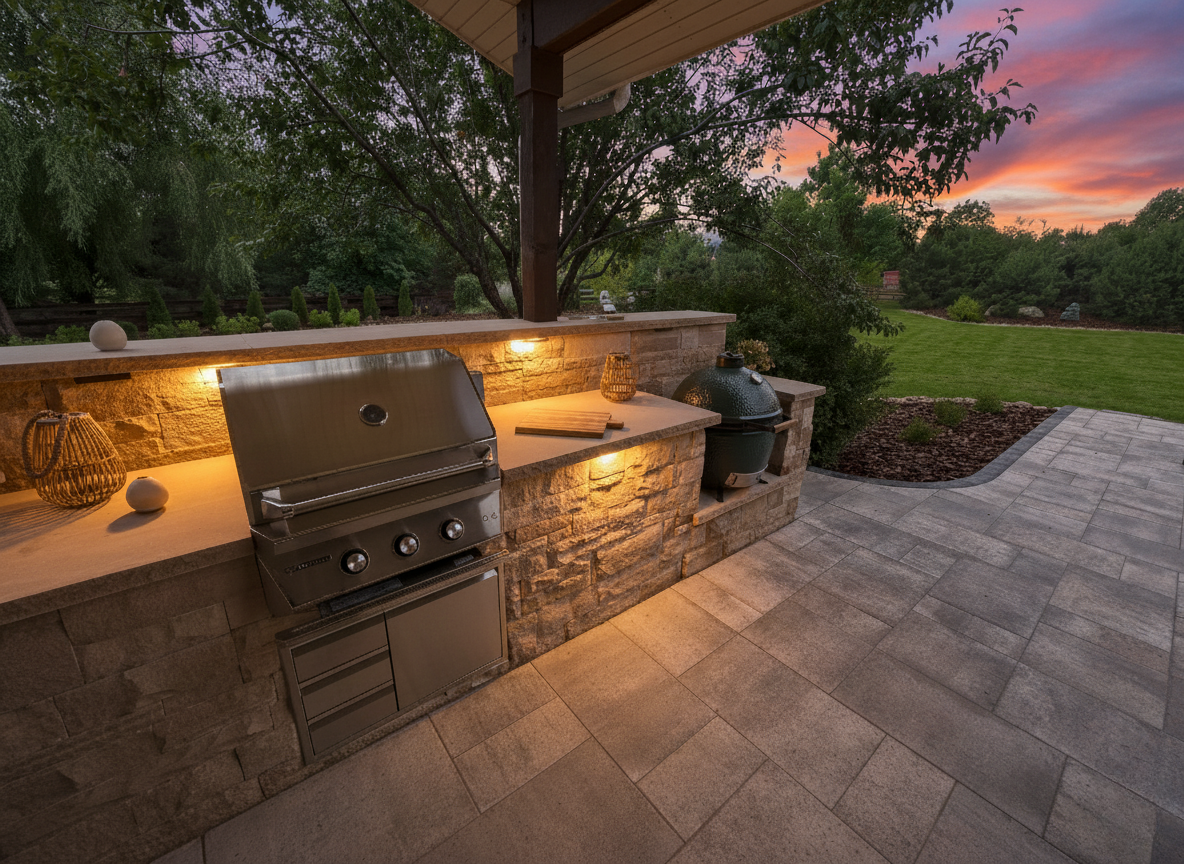
The best outdoor kitchen design starts with how you cook, entertain and spend time outside. A practical layout brings together preparation space, cooking equipment, seating, storage, lighting and access to the house, while accounting for Colorado's sun, wind and seasonal temperature swings.
An outdoor kitchen can be as simple as a built-in grill and work surface or as involved as a dedicated cooking and dining pavilion. In Boulder County, thoughtful planning is what makes either version comfortable to use. The features should feel like a natural extension of the landscape rather than a collection of appliances installed on a patio.
Decide how you will use the space
Start by picturing an ordinary meal outside. Will one person be grilling while everyone else gathers at the table? Do you regularly host a large group? Would you rather have a place to prepare food outside or carry everything from the indoor kitchen?
The answers influence the amount of counter space, seating and storage that makes sense. A household that cooks outside several nights a week might prioritize work surfaces and task lighting. Occasional entertainers may prefer a simpler cooking station and a larger dining patio. A functional design balances the two without adding equipment you rarely use.
Choose a location that supports daily use
Proximity to the house makes it easier to carry food, dishes and supplies. However, the most convenient location must also account for ventilation, equipment clearances, existing utilities and pedestrian routes. Wind patterns can influence how smoke moves across the seating area.
A landscape designer can assess how the kitchen relates to doors, windows, views, existing trees and other outdoor features. Separate circulation routes are useful: guests should be able to move from the house to the dining area without crowding the person cooking. Any gas, electrical or plumbing connections should be planned with appropriately qualified trades and applicable permit requirements in mind.
Choose materials for exposure and maintenance
An outdoor countertop and cabinet system experiences conditions that an indoor kitchen does not. Sunlight, snow, moisture and repeated heating and cooling can affect finishes, joints and hardware. Select products specifically rated for the intended outdoor use.
Stone, masonry and appropriately rated metal components can work well in outdoor settings, depending on the installation. Consider how easily surfaces can be cleaned and protected during winter. Drainage around the patio and built elements also deserves attention. A visually striking kitchen that collects water at its base is not a successful design.
Include comfortable dining and lighting
An outdoor kitchen is often the center of a larger outdoor living space. Dining and conversation areas need comfortable access, adequate room to move and some protection from harsh sunlight. Shade can come from the orientation of the house, an existing tree or a purpose-designed overhead element suitable for the setting.
Lighting should serve distinct purposes. Task lighting makes food preparation easier, while subtle pathway lighting supports movement after dark. Avoid glaring fixtures that interfere with the enjoyment of the yard or neighboring properties.
Plan the construction sequence
Work with a designer to coordinate patio elevations, utility needs and structural elements before construction begins. Installing underground connections before the finished hardscape can reduce unnecessary disruption. Review the appliance specifications early so the built-in surrounds match the equipment you intend to use.
Allow room in the project plan for material selection, approvals, site preparation and installation. A clear design can help homeowners compare priorities and decide where to invest without losing the overall vision.
Frequently asked questions
Does an outdoor kitchen need plumbing?
No. Plumbing is optional if you do not need an outdoor sink or other water-connected equipment. Where plumbing is included, plan for seasonal freezing conditions and proper winterization.
Can an outdoor kitchen be added to an existing patio?
Sometimes. The patio's condition, load capacity, dimensions and utility access should be assessed first. An expansion or reconstruction may be more practical on some sites.
What is the best time to start planning?
Begin well before the desired construction season so design choices, materials, approvals and scheduling can be addressed without rushing.
Bring cooking and gathering outdoors
Native Edge Landscapes helps homeowners in Boulder, Louisville and Superior plan outdoor spaces that feel connected to their homes. Explore our landscape construction services and project gallery, then request a consultation to discuss your outdoor kitchen ideas.
#